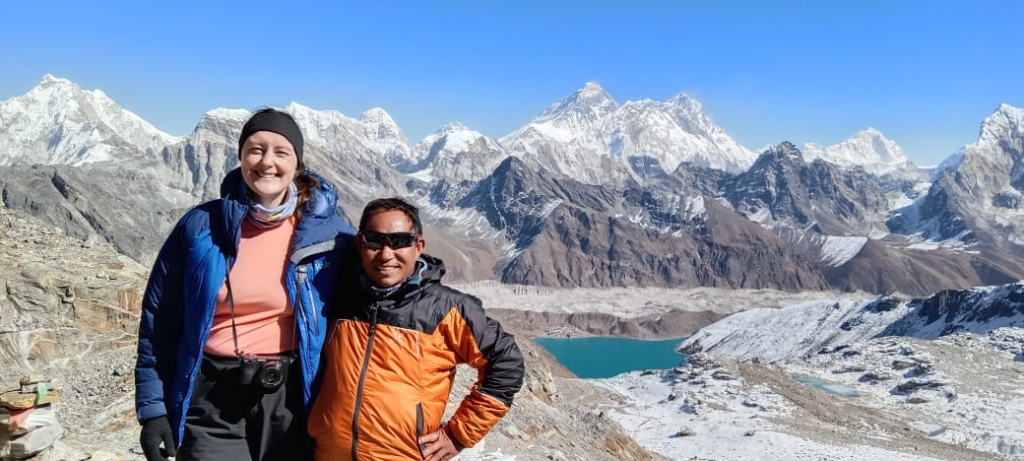
For many of us, the Everest Base Camp Trek is a bucket list trek, and for people who love photography, it doesn’t get much better – I doubt you could find anywhere else in the world with better mountain photo opportunities. Since then, the trek in the Himalayas, and with Mount Everest in the background, has been everything from dramatic vistas to richly painted Buddhist prayer flags, golden sunrises, and quiet moments of introspection on the trail. But getting those memorable Everest shots is hardly just point and shoot: There’s the right place, right time, preparedness, creativity, and a little technical know-how.
Whether you are a pro who is on the base camp trek to Everest only to take pictures, or just a weekend wannabe catching crazy memories on a weeklong trip to Base Camp of Everest, this article is here to teach you exactly how to have epic photos at the Everest Base Camp tour. We will also clarify how it offers a better photography approach, which is included in your entire Everest Base Camp trek package and enhances the superior experience.
Know Your Gear Before You Go
You want to have a rapport with your kit before you even touch down at an airport like Lukla. Or take a first step in earnest towards Everest Base Camp. Whether or not you are using a DSLR, a mirrorless shooter, or a phone, you have to understand how to change the ISO, aperture, and shutter speed. It is also a component of battery lifestyles, that’s at a top rate within the bloodless and at excessive altitude, but additionally time, as the ideal sunrise in iciness simply waits for nobody.
In case you’ve booked a guided Mount Everest Base Camp excursion, ask your guide earlier for the nice photograph op spots. Guides are professional at locating the right viewpoints and times to shoot the mountain and can help you get there at dawn at popular vantage points like Kala Patthar and Tengboche.
Lighting Is Everything
For photography (and especially in the mountains), light is everything. Magical light overlooming Lobuche on the EBC trek. The light was the best on the whole trek, morning and evening. The golden hour, whilst the sun is near the horizon, illuminates Everest simply so on the digicam’s warm spectrum, whether or not for those iconic silhouette photographs or crisp, exact info in the snow-draped peaks.
Shoot at midday and you’ll be managing harsh shadows and blown-out skies. Having said that, with the use of filters or framing correctly, even midday can be used to a great extent. If only on the standard EBC trek schedule, the Everest sunrise through Kala Patthar is usually classed as the top photo. From here, you will definitely capture a view of an early-morning Everest bathed in light and – generally – free from clouds.
Think Beyond the Mountain
While Everest is the star of the show, be sure to capture the journey to reach it. The teahouses you sleep in each night and the breakfasts you devour each morning are as much what make trekkers talk about the Everest Base Camp hike as the views from the top, but so too are the suspension bridges over deep chasms, the mani stones carved with Tibetan prayers and the prayer flags that spin out into the deep blue sky. Those little cultural nuggets are the stories of that region and what makes your images that much more personal and engaging.
Photograph people you encounter, of storytelling yaks carrying supplies along the trails, and your own trekking companions. These pictures speak for themselves and literally transport you so that you feel that you are along on your Everest Base Camp trek.
Composition Is Key
Make sure you compose your shot well! Allow natural lines in the environment — trails, ridgelines, rivers — to guide the eye of the viewer to Everest. With a few foreground elements — rocks, prayer flags, trees — you can add depth to those pictures, making Everest seem even bigger and more ominous in the background.
Including people in your pictures, particularly silhouettes, can give context and a human dimension to the image. And an unmarried trekker peering toward Everest ought to be more drawn to rouse the marvel and majesty of the Himalayas than any simple-vanilla panorama.
And if the cost of your Everest Base Camp trek includes a guide or porter, ask them that help you pose or take some photos of you inside the setting. Those people know the path and the lights, and they can help you with a few clearly terrific photos.
Keep Your Gear Safe and Dry
A wise thing to do in the thforever-changingng Himalayas, weather, you got that. It can snow, get very windy and foggy with absolutely no warning, even during the best trekking seasons. Carry a waterproof cover for your camera and perhaps a dry bag, and never leave your gear outside, even in your sleeping bag or in your lodge (where we will drip with condensation or freeze).
Equally as vital are the backup memory cards and charged batteries. And battery life at altitude is even worse in the cold. Pack at least two extra batteries, and for what it’s wor, you can keep them close to your body during the course of the day to maintain a bit of warmth on them. That little bit of nature can be the difference between capturing the film and not being able to take your eyes off the mountain.
Compliment, Don’t Overwhelm with Your Edits
Some of the deep shadows and close quarters were dealt with in post-processing, which can be a blessing when working up there in the high-contrast Himalayan world. Editing can rescue shadow detail, repair exposures, and colours. But remember, the goal is to highlight its natural beauty — not to create something artificial. If your shots don’t look like you remember them, Subtle contrast, sharpening, or white balance adjustments will save your favorite pictures.
And if the cost of your EBC trek included Wi-Fi at some tea houses, you may even be able to edit and share shots while on the move. But the signal is spotty, and fast Wi-Fi is rare; power outlets are hard to come by — pack portable chargers and upload your data in low-altitude towns, not in the higher-altitude villages where battery-charging time is rationed.
Time and Patience To Take and Set Up Your Shot
The real price you pay to hike to Everest Base Camp, however, is not the financial cost of the hike, but also the cost to your energy, time, and physical output to climb to those vantage points. Which is why waiting exactly pays. Clouds may break only momentarily in the morning and evening. Be there, be patient, and you’re going to get the type of image people dream about when they think of Everest.
If you’re dreaming of your Everest Base Camp trek and if you’re really into capturing photographic moments, do try and plan you’re spending some more days in places like Dingboche, Tengboche, or better, Gorak Shep, and take shots for that matter, for clear weather and light.
Very last mind
You don’t need to be taking pictures with the most luxurious camera or the longest lens to create unforgettable photos of Everest. It’s also approximately being there, seeing how the land unfolds, and making a story with your pics. Whether or not it’s the implementing peaks, centuries-old monasteries, or the euphoria of attaining Everest Base Camp, images bring a new aspect to the trek.
EBC trek. Take just 2 weeks out and the rewards, memories of Everest will far outlast your holiday. With preparation and gear and timing and perspective, you’ll go home with images that not only reveal to the world what you were looking at but how it felt to be there.